For more than 20 years, GORGES has built websites, apps, and custom software for businesses around Ithaca and across the country, from local dairies and contractors to Cornell and eBay. We did not add our AI services suite in 2026 to chase a trend. We added it because after two decades of building software, we can see where AI is genuinely useful for a business, and where it is not yet.
We have used AI for years, first as a quiet helper inside our design and programming, and more recently by building apps for our own work and our clients’ work, drafting content, marketing, reporting, coding, and more, some of it running overnight while we sleep. Now we are offering that same tried-and-true process to other small businesses.
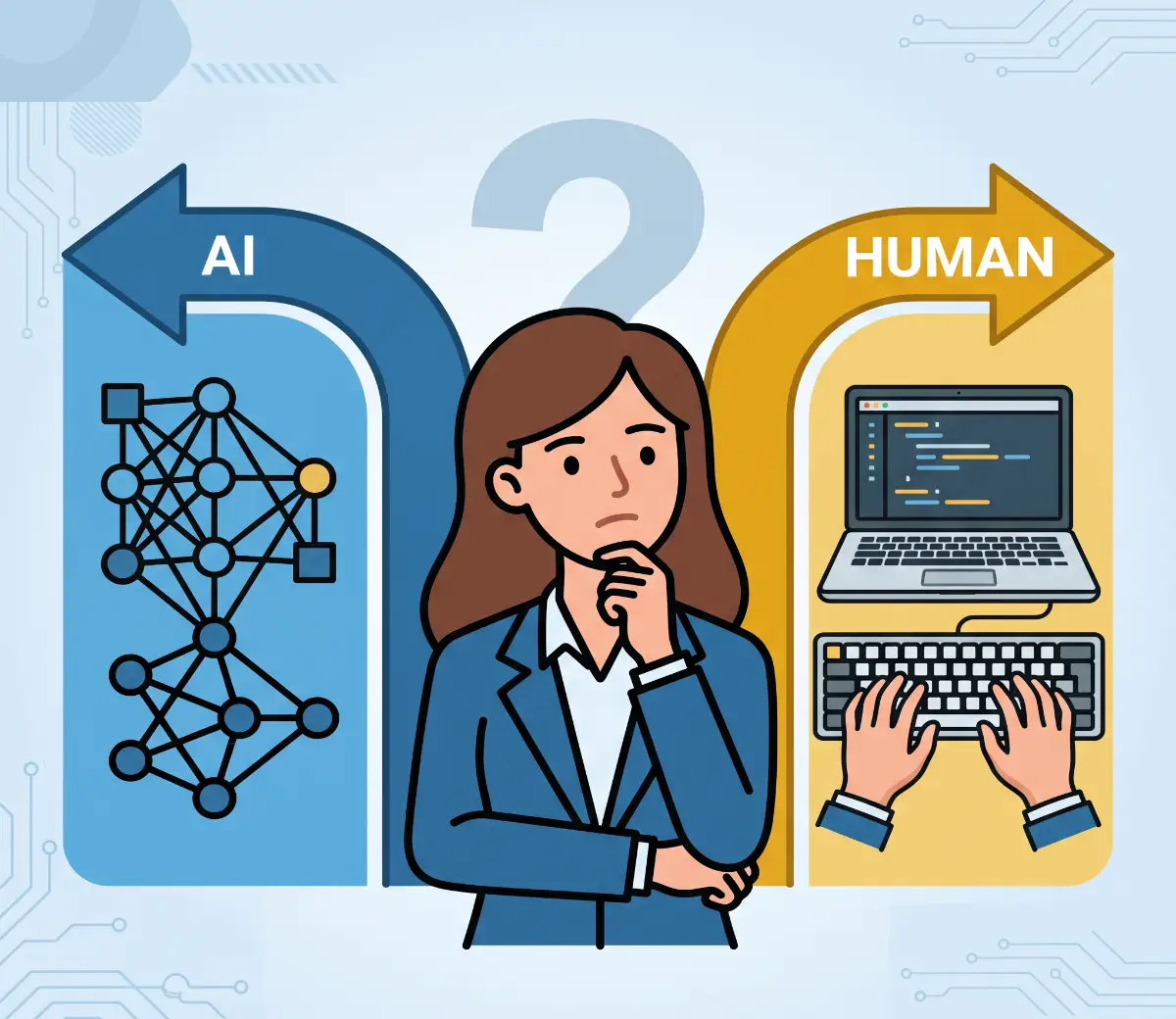
This post is a look at how we decide what to hand to AI and what to keep in human hands. That is the Key to all of it. Our work begins with a review of what you already do, if you are new to GORGES, and then follows four disciplines that hold quality and transparency in place.
Start with the work you already do
Before you look at a single AI tool, look at your actual week. What did customers ask? What did you type more than once? Some of the value hides in the repetitive work: the same questions about hours and pricing, the follow-up that never quite happens, the report you rebuild every month and wish you had more often.
Write down five to ten of those tasks. For each one, note how often it happens, how long it takes, whether the answer is mostly the same each time or changes case by case, and what it costs you if it is done poorly. We have an intake form we can work through together.
Ask ‘should AI do this,’ not just ‘can it’
This is the part some consultants skip. AI can work on almost anything now. The better question is whether it should.
Documented, repeatable work is a strong candidate: answering common questions, drafting a first reply, organizing customer feedback, preparing an invoice. The moment a task needs real judgment or carries feeling, a complaint, a negotiation, a service that went wrong, it needs to stay with a person. Some tasks sit in the middle, where AI researches, synthesizes, drafts, or prepares, and a team member reviews for accuracy and quality.
Keeping that line clear is where your business still sounds like you. We are here to help your team deliver more of your core value at a higher standard, not to replace them with software.
Describe it like you would train a very literal new employee
An AI system is only as good as the description you give it, so before we automate anything, we write three descriptions.
The first is the product: the end result, the inputs it receives, and the outputs it should produce. The second is the process: the step-by-step logic, including where it decides and where it escalates. If the question is about pricing, use the price list. If it is a custom request, hand it to a person. The third is the performance: the tone and the boundaries. Friendly and clear. We put in guardrails so it does not guess when it is unsure, and does not promise or share anything it should not.
Write those three well and you have given the system the foundation of a task it can actually do. Skip them and you have given it permission to improvise, which is where trouble starts.
Test it against real examples, then keep watching
No description, no matter how thoughtful, survives first contact with real work. We test your new system against real cases from your business and we fix what it misses. Did it sort things correctly? Are the answers accurate and right in tone? Did it make up anything it did not actually have? Iteration is normal here. Expect two or three rounds before it feels reliable.
Even an automation that runs on its own still gets monitored. We teach it, guide it, and improve it until it can run without help, and even then you see a report each day on what it did, so you know exactly what happened.
Be honest about it, on purpose
Before anything reaches a customer, we plan for what could go wrong and how we would catch it. Together we sort out what gets reviewed and how often, what evidence would let us reduce oversight, and what would make us stop it for a deeper review.
That honesty is the difference between AI you can leave running and AI that could cost you a customer.
Where GORGES comes in
That is a glimpse of what effective AI services look like, and it is what we now do for other businesses.
It starts with an AI Readiness Diagnostic. We spend about 75 minutes together walking your operation, and you leave with a written report and a roadmap, based on your goals for your business. From there you can take a single build, or grow into an ongoing role where one accountable person from our team directs AI for your business over time. We do this work every day and keep up with what changes, so what we bring you has already earned its place in a real business.
If you have wondered whether AI is worth your time yet, or where it would actually help, that is exactly the question we are here to answer. Would you like a roadmap for your business? Let’s start the conversation.
Connect with us!
Let us know how we can help you bring your ideas to life